Timeout! is a 2D arcade-style beat-em-up that utilizes system design to create a game effectively, primarily focusing on the systematic organization and reflection of data which are commonly found in games that save and load data from files.
In the process of utilizing the data, endless waves of enemies of different permutations could be spawned in until the player is forced to defeat. The following breakdown for the game identifies the data identified and implemented.
Character System & Weapon System
Enemy & Enemy Wave System
EXP / Level Up System
Achievement System
Dialogue System
Saving Game Data
Saving Analytics Data
Saving Achievement Progress Data
When starting out, I identified the game that I had wanted to create using the database and system approach. I decided that I wanted to create a beat-em-up style game, that provides retro themed art with pixel art. With the gameplay idea in mind, I set out to ideate the systems required for each aspect of my game.
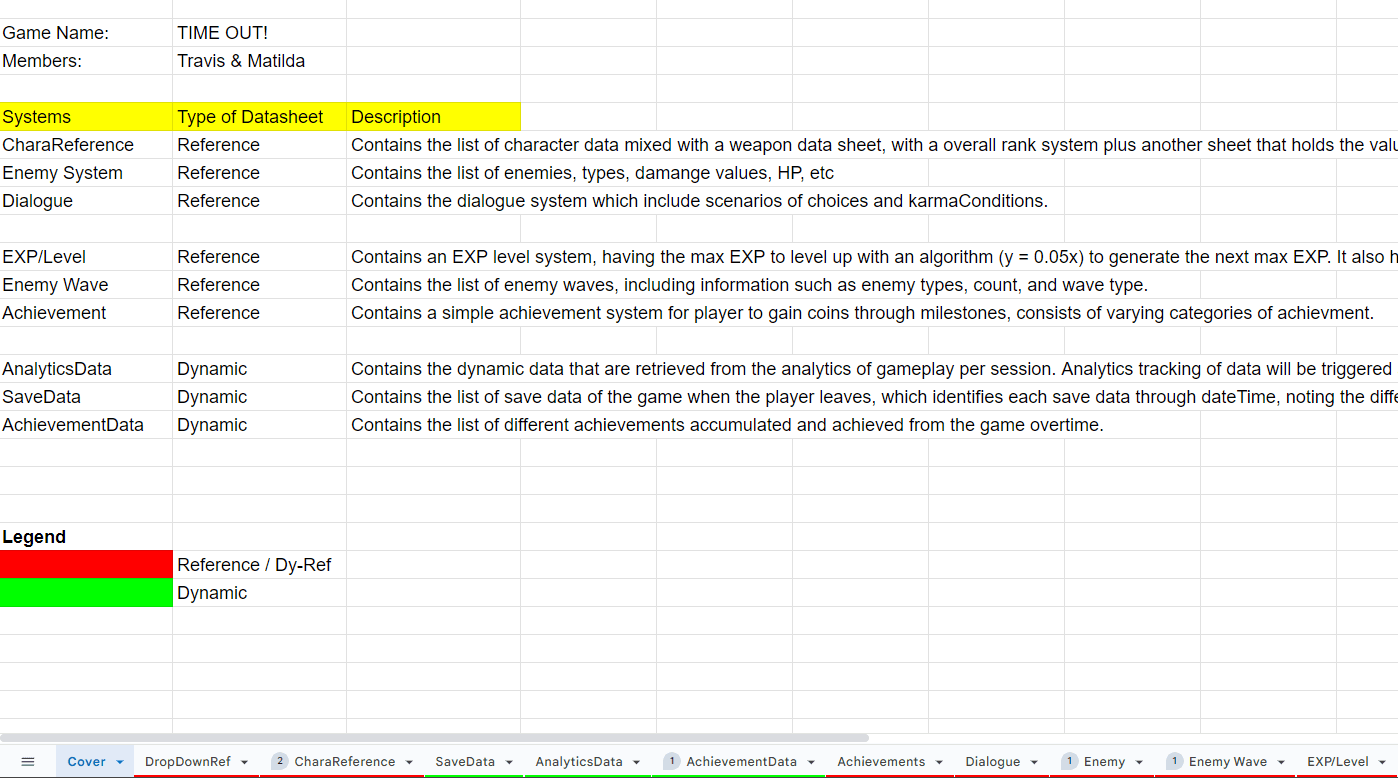
Below is a Google Spreadsheet cover of my different systems to implement. The 1st group of systems are mandatory systems that are required in the game for it to function / required for rubrics. The 2nd group of systems are added systems to make the game function off the systems. The last group of systems are dynamic systems where data is supposed to be uploaded into the respective files as a save file.
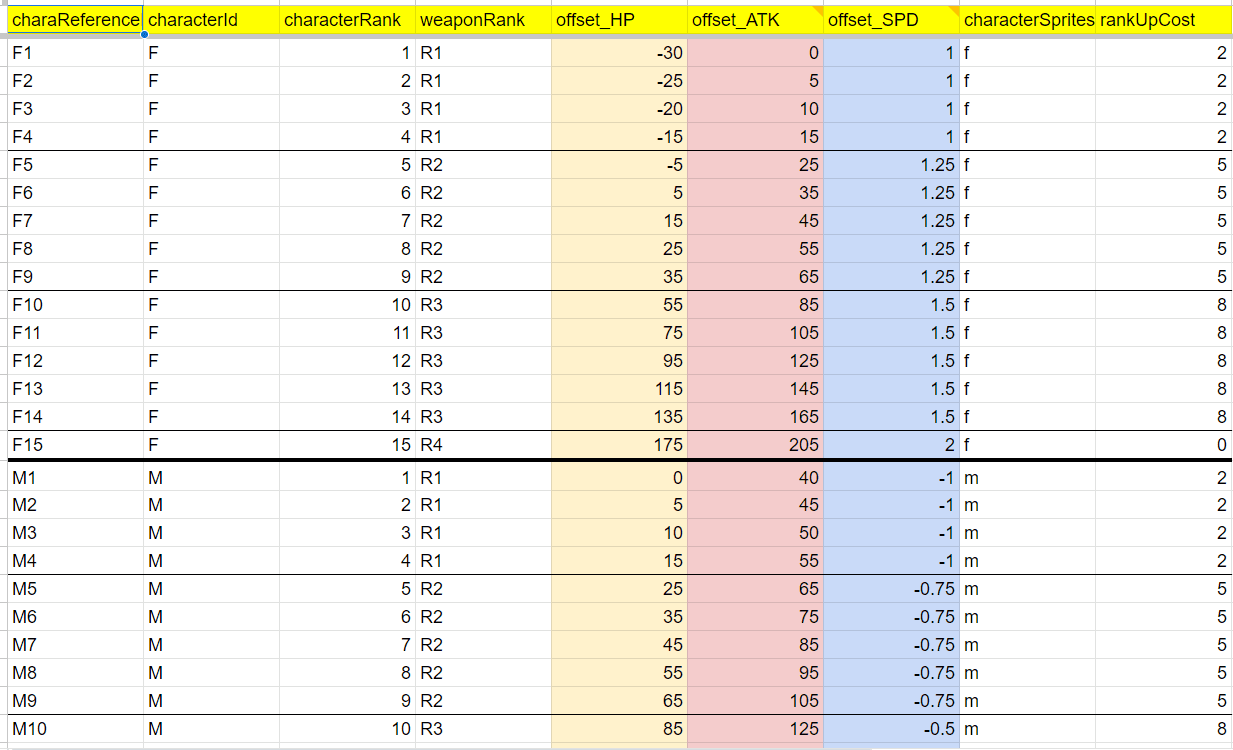
The character reference datasheet primarily caters to all the different permutations of the player's possible classes, level and player stats as a whole.
As shown on the right hand side, there are different columns of information that demarcate the player's different state. This sheet then facilitates the level up details of each player time when categorized by "characterId" from code.
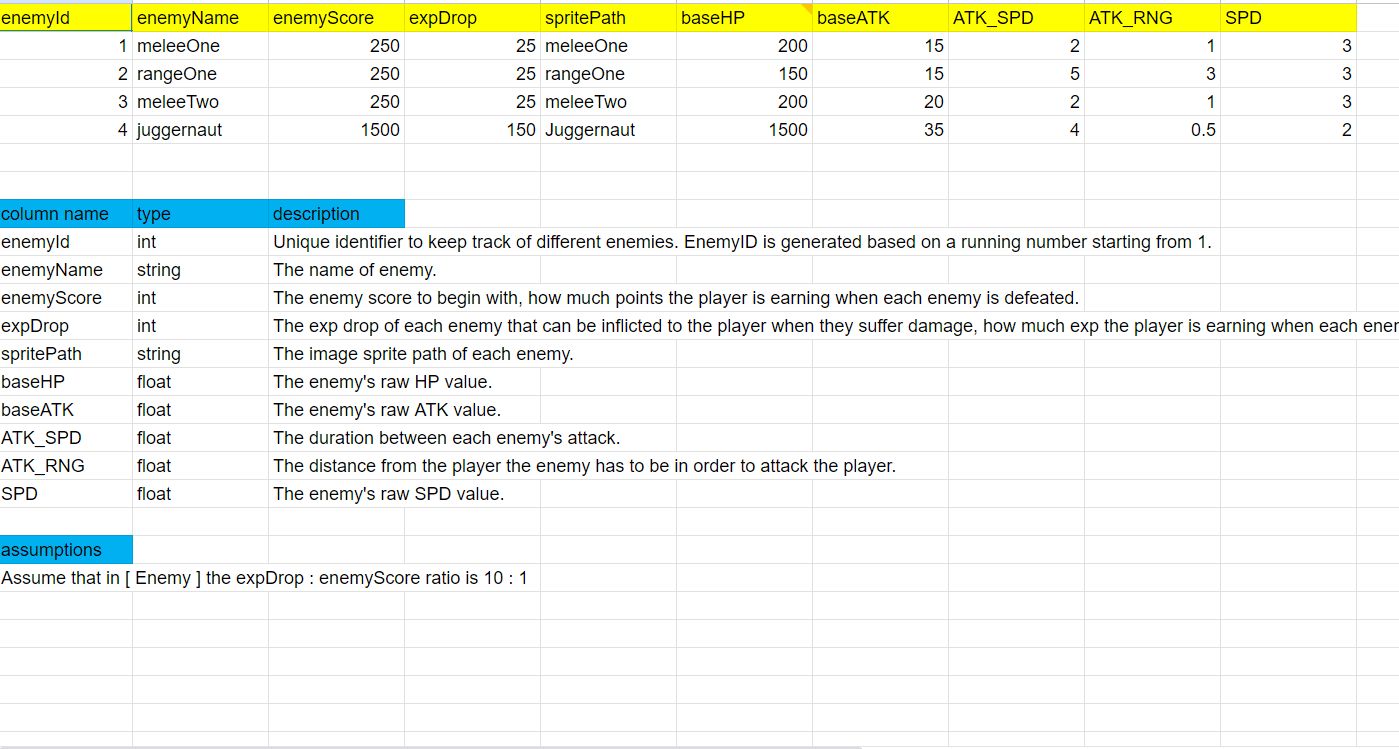
This enemy datasheet consolidates all forms of enemies that will exist in the game. This sheet will tells us in the game what each enemy's statistic is, ranging from Hit points to attack damage and attack frequency.
On the left hand side, there are 4 different enemy times created in my game, thus leading to many possible permutations for the enemies to spawn in waves.
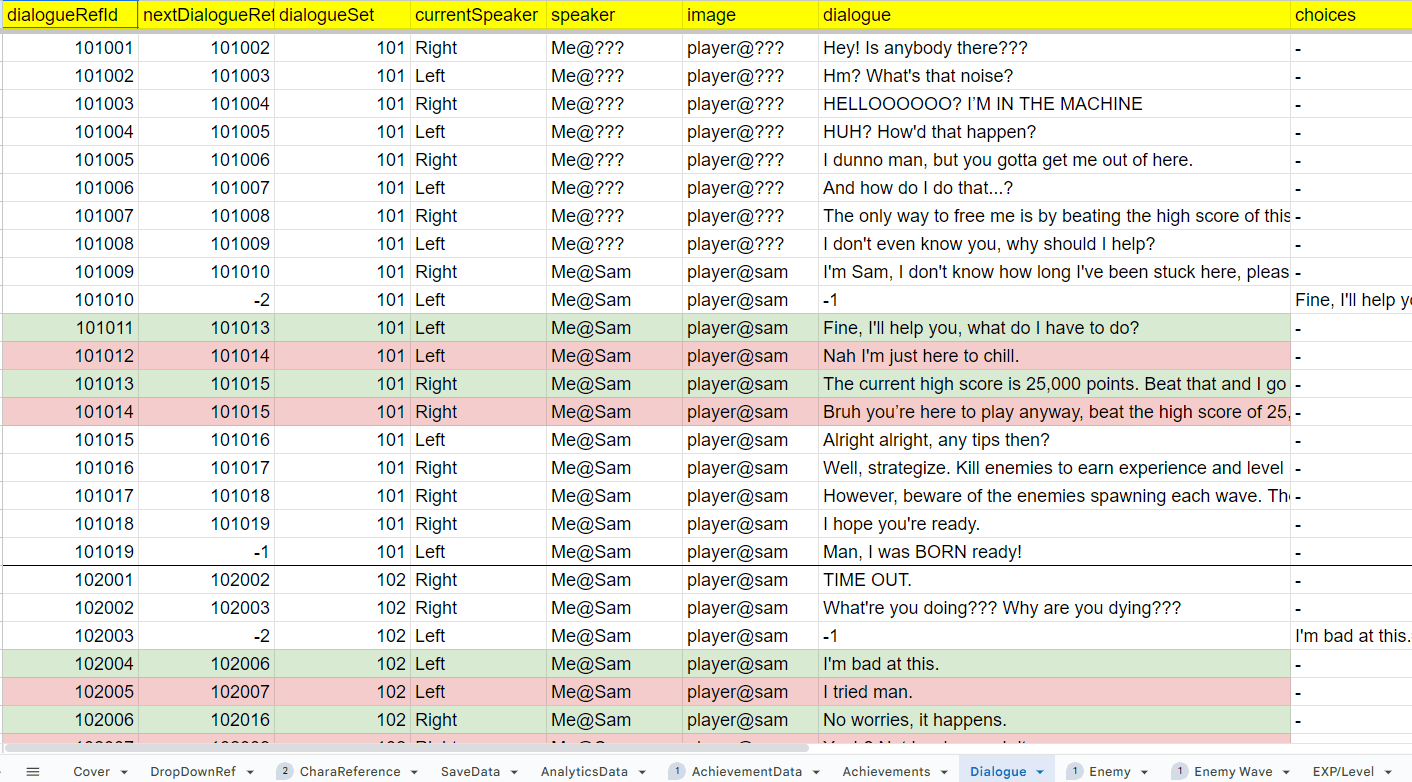
The dialogue datasheet is a culmination of all possible dialogues that exist in the game. This includes the dialogue index, what comes next, where the speaker's position is, etc.
This datasheet can reach extensive lengths for larger plot-based games and is color-coded in the sheets for when players are given a choice and the respective responses they can make.
Given the additional requirements of our project to have at least 3 added systems to our game, I decided to integrate the following engines into this beat-em-up game that I've planned for.
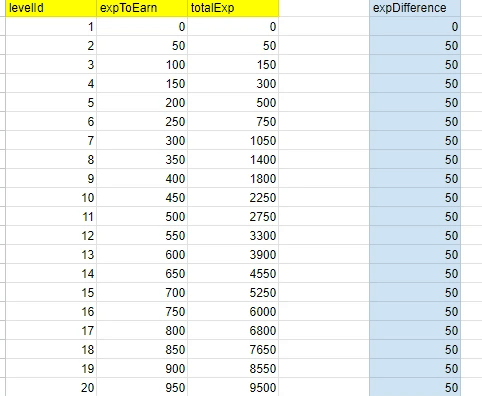
This EXP / Level Datasheet caters to the player's progression, including requirements to reach the next level, such as the next max experience points required to level up, as well as the total experience points required.